
ITC 101 Series: Why You Should Use Ferrules and Crimp Terminals for Safer Connections
Why Proper Wire Termination Matters
Proper wire termination helps create secure, reliable electrical connections in control panels and machinery. Ferrules and crimp terminals prepare wire ends for different connection types, providing several benefits:
Strong mechanical and electrical connections
Reduce electrical resistance
Protect wire ends from fraying, corrosion and short circuits
Organize wiring for easy installation and maintenance
Ferrules: Protecting Stranded Wire Ends
A ferrule is a metal sleeve crimped onto the stripped end of a stranded wire before insertion into a compatible terminal. It holds the individual strands together, helping prevent fraying and damage during installation.
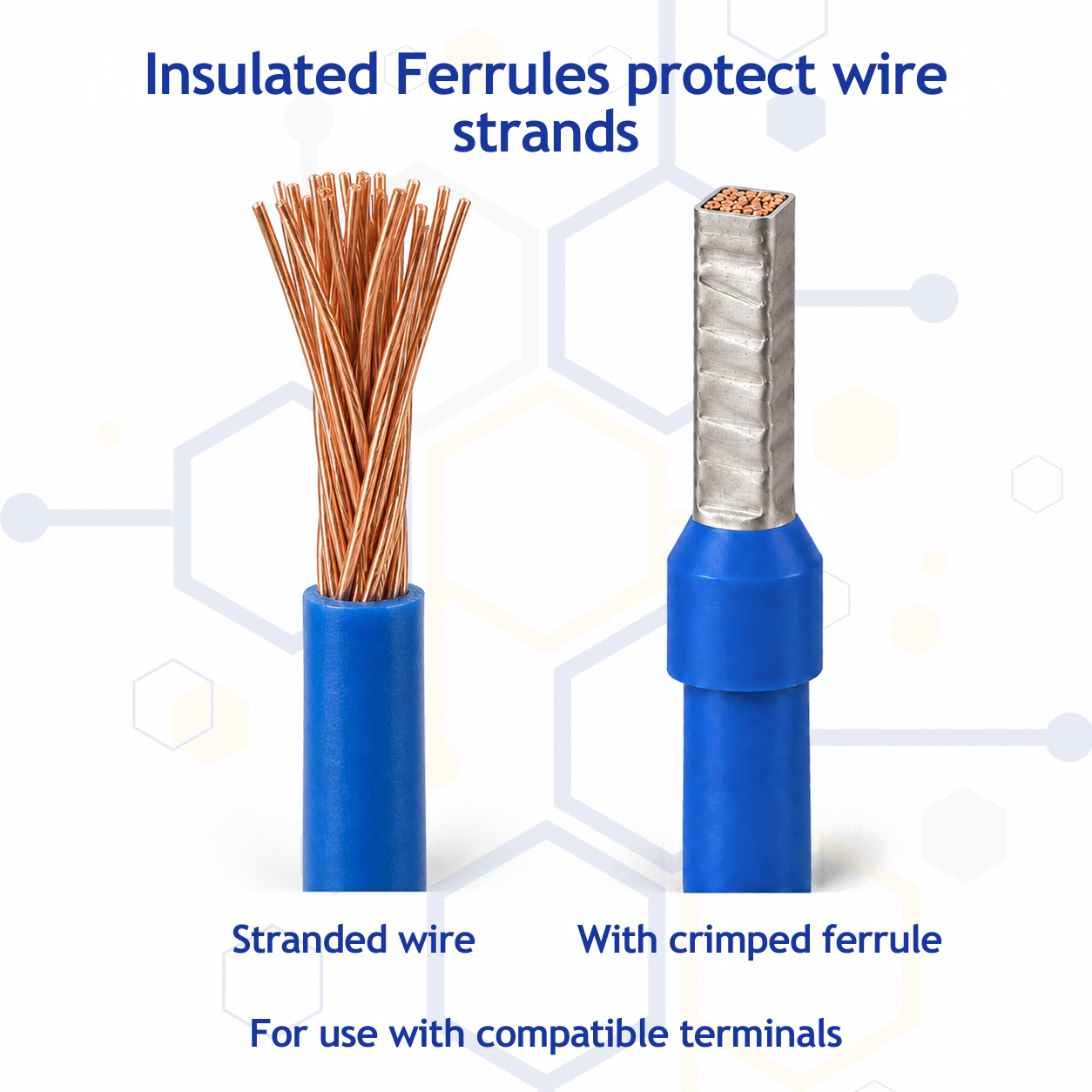
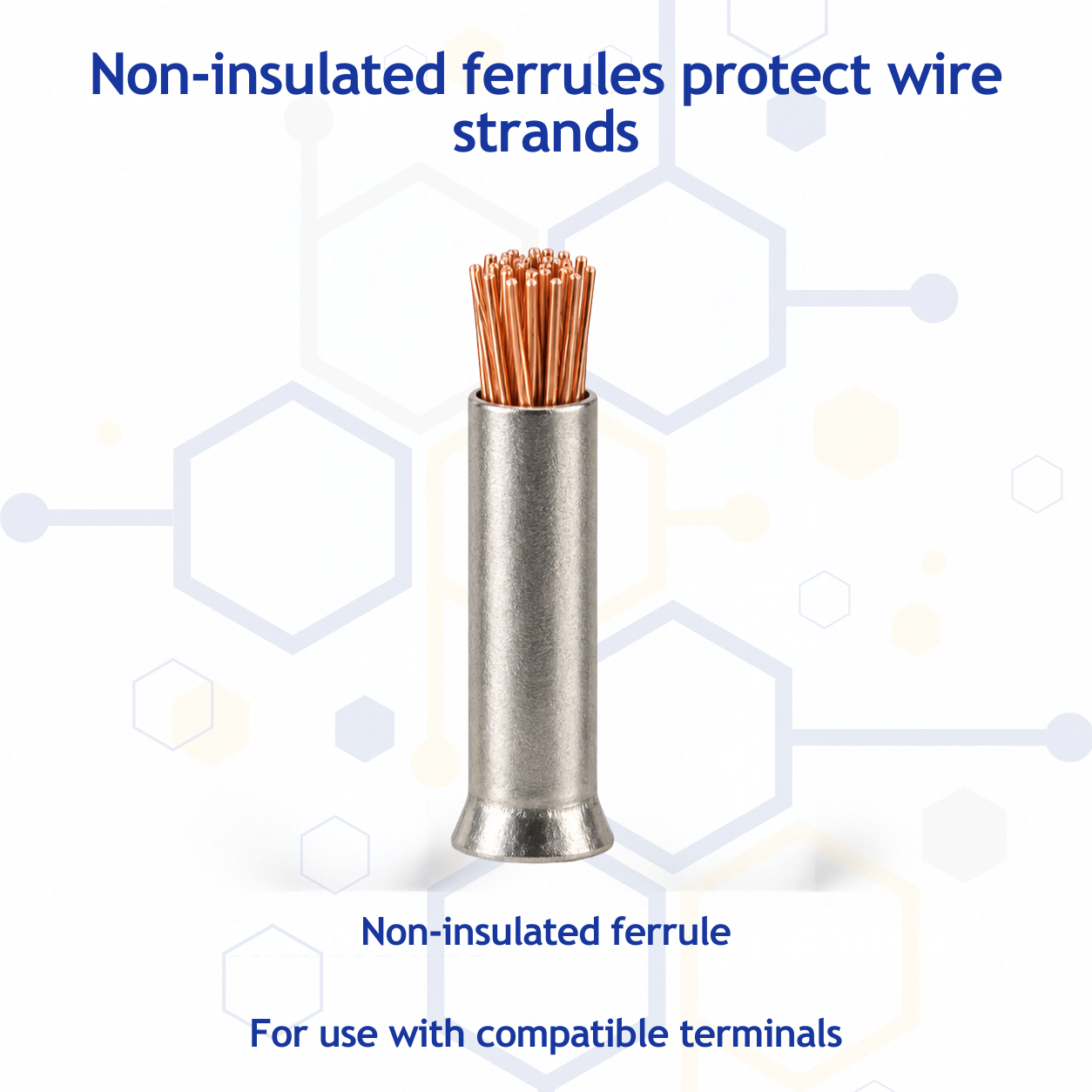
ITC’s non-insulated, single insulated and twin insulated ferrules are made from 99.9% electrolytic copper with tin plating.
- Non-insulated ferrules: Metal sleeves without a plastic collar.
- Single insulated ferrules: Include a plastic collar for a single wire.
- Twin insulated ferrules: Accommodate two wires of the specified size in one sleeve, for use with a compatible terminal.
Selection depends on the wire size, sleeve length and the receiving terminal’s requirements.
Crimp Terminals: Matching the Connection
Crimp terminals attach to the conductor by compressing a metal barrel around it. The connection end is selected to suit the equipment. Correct terminal selection and crimping help establish a secure electrical and mechanical connection.
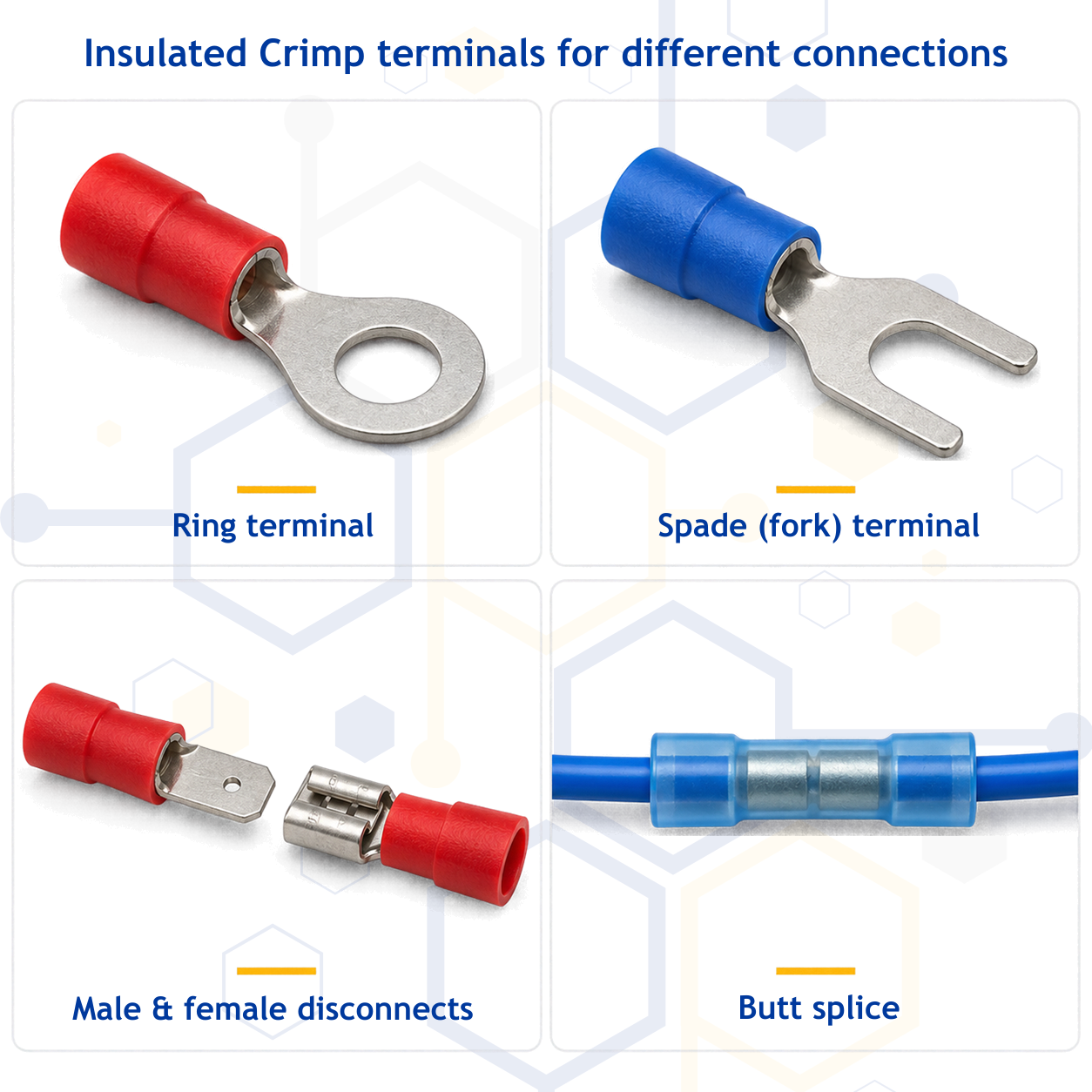
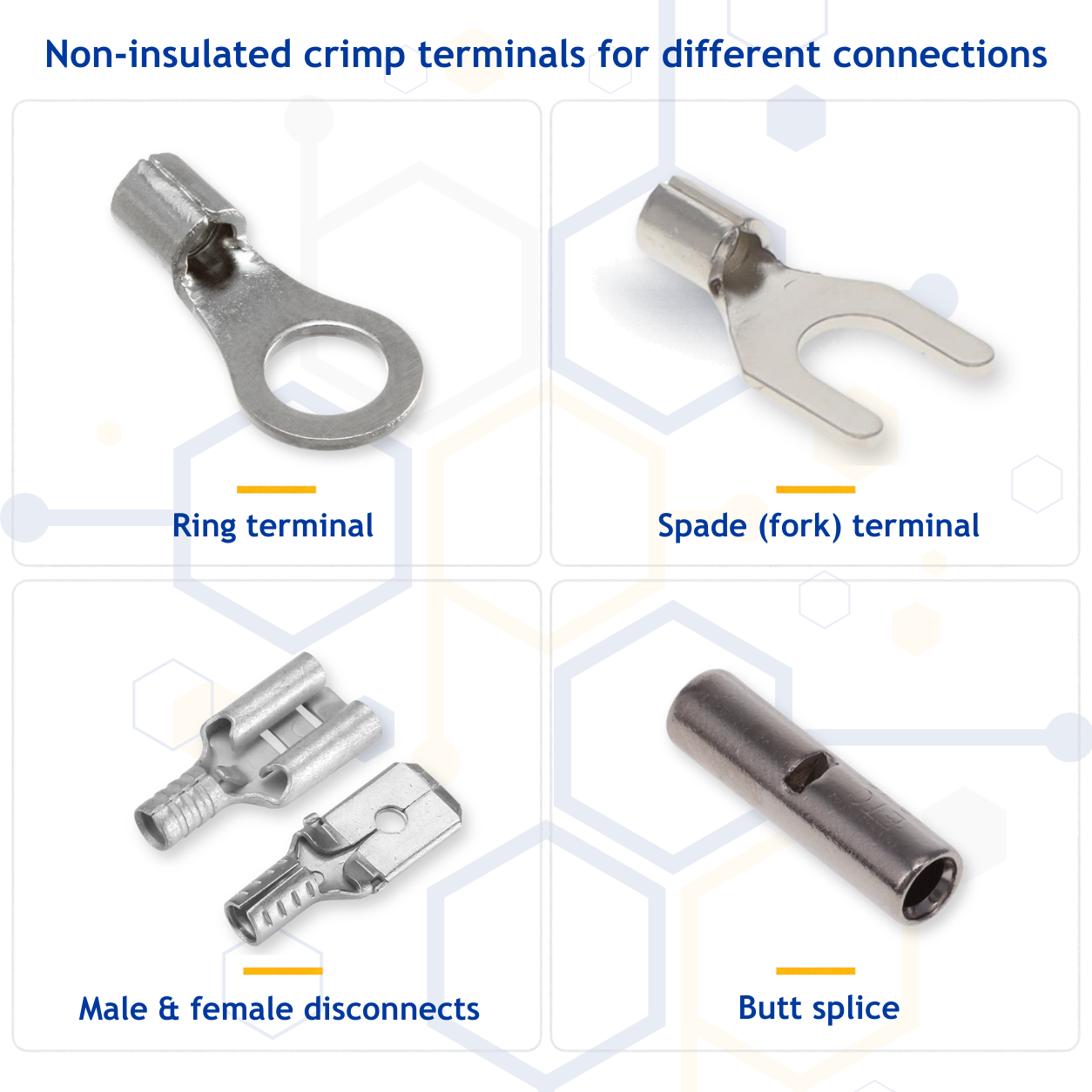
The most common crimp terminals include:
- Ring terminals: A closed ring fits over a screw or stud.
- Spade (fork) terminals: An open fork fits beneath a compatible screw connection.
- Male and female disconnects (tabs): Matched connectors for quick installation and removal
- Butt splices: Join two wire ends together
Crimp terminals are available in non-insulated and insulated versions, with options depending on wire size and stud size.
Correct Selection and Crimping Matter
The terminal, wire and tool must be compatible. ITC’s product tables identify wire sizes, connection dimensions and applicable tools.
- Match the wire: Check the specified AWG or mm² range.
- Match the connection: Confirm sleeve length or stud size.
- Prepare correctly: Remove the specified insulation length without damaging strands.
- Crimp correctly: Use the appropriate tool and inspect the finished connection.
- Be compliant: Follow CSA, UL or other industry standards
Incorrect wire preparation or crimping can weaken the connection. Always follow the component and equipment manufacturers’ instructions; wire termination is not required for every connection.
Wire Termination Solutions from ITC
Contact ITC for assistance selecting ferrules, crimp terminals and matching crimping tools for your application. Click Here!
Reference:
Ferrules Direct (n.d.). What are Wire Ferrules and why should you use them? Available at: Ferrules Direct (Accessed: 17 September 2026).
Cable Ties Unlimited (2024). All About Wire Terminals: A Comprehensive Guide. Available at: Cable Ties Unlimited (Accessed: 17 September 2026).
Learn more with the ITC 101 Series:
ITC 101: Understanding IK Ratings for Electrical Enclosures
Understanding IK Ratings for Electrical Enclosures
Read More
ITC 101: NEMA Ratings VS IP Ratings
NEMA vs IP Ratings
Read More
ITC 101: Understanding NEMA Ratings for Electrical Enclosures
Understanding NEMA Ratings for Electrical Enclosures
Read More